
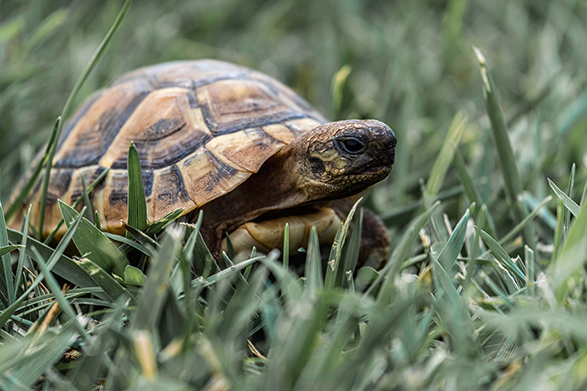
A little dive into tortoise lighting.
In this article, I will use references and literature to back up my claims. References are in square brackets [] and are listed at the bottom of the page
If you know anything about me, you’ll know I work with exotic animal lighting a lot. And if you’ve spent any time looking at my posts and details, you’ll quickly learn that I have a soft spot for tortoises. Tomaskas may be able to help answer some questions.
This article is designed to be a really quick guide on tortoise lighting. It won’t cover all aspects, and won’t go into all of the detail needed to completely comprehend the minefield of information. We have more information, and can offer a personalised consultation to suit your needs, just contact us for information on this.
I make no money from any recommendations in this article – Tomaskas is not commercially associated with any of the companies that we mention herein. Please shop around to get the best deal for you, and don’t forget to support your local stores where possible.
Bought a setup, and you’re not sure it’s right? Been advised that you should do some research? Read on!
Firstly, we need to recognise that not all tortoises come from the same place on Earth. They live in different environments. In the spirit of making this article as easy as possible, we’ll split the most commonly kept species into two main groups – “Shade Users” and “Sun Users”.
One thing is for certain, no matter what kind of species you keep, it’s an animal that has evolved over millions of years to utilise every bit of sunlight that it can. The sun provides essential UVB, UVA, Visible, and Infrared light – all of which play vital parts in the biology of the tortoise. It is when all of these components are combined that we see the true biological effects – and this combination of light is called “full spectrum lighting”.
We could go on for ages about the importance of light, but we already have documents and information about that available on the site – so for now, just know that full spectrum lighting is what we are aiming for – because it’s what the animals have evolved under.
Failure to provide certain sections of this spectrum can cause problems down the line, like Metabolic Bone Disease, lethargy, decreased appetite, and even death.
Shade Users
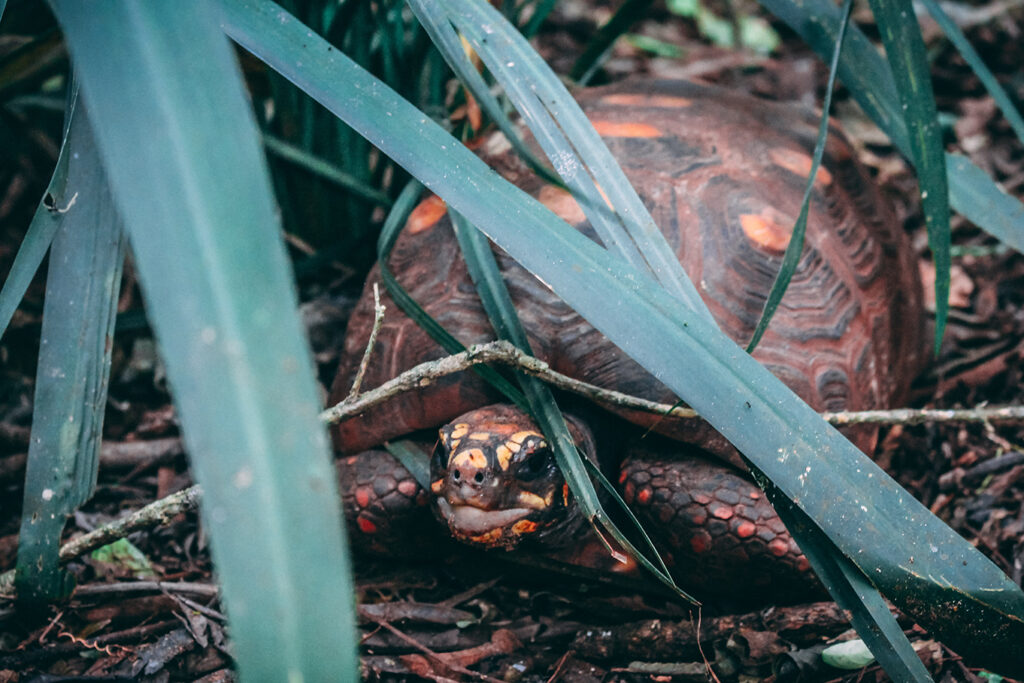
Species that we’re considering here generally spend a lot of their time in the shade – this could be in the forest or in shrubs. They see direct sun, but often it is through a canopy above. They may not get as much “direct” sunlight because of the way that they live. This could include:
- Red Foot Tortoise
- Yellow Foot Tortoise
- Cherry Head Tortoise
- Asian Box Turtle
- Asian Leaf Turtle
- Elongated Tortoise
- Pancake Tortoise

Sun Users
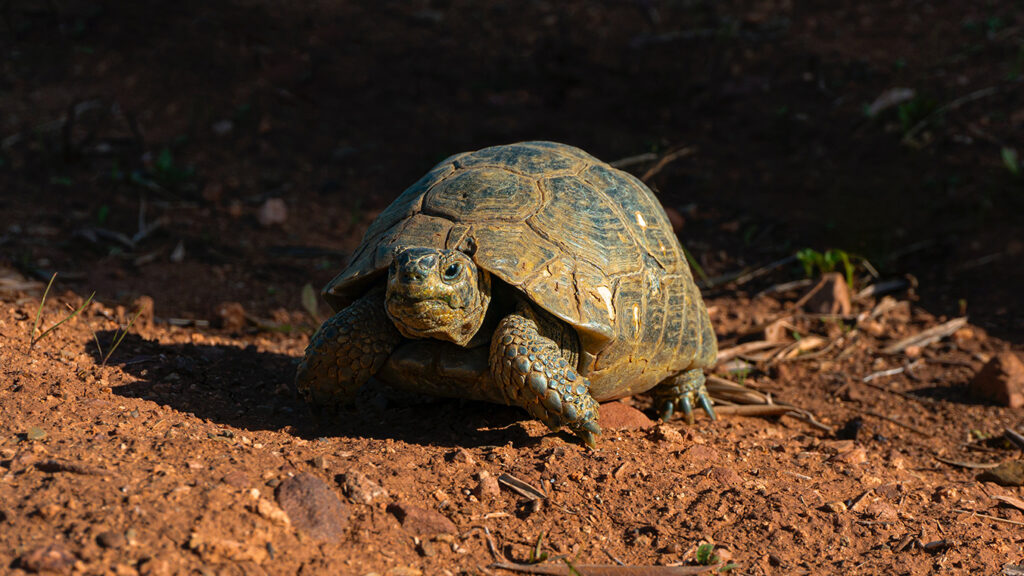
Species that we’re considering here generally live in areas that see them experience more direct sunlight – this could be in the desert, or out on plains. Regardless of their exact habitat, they get a reasonable amount of direct sunlight in their environment. Species in this list are most commonly kept as pets. This could include the following species and their subsequent sub-species:
- Hermann’s Tortoise
- Horsfield Tortoise
- Sulcata Tortoise (African Spur-Thigh)
- Greek Tortoise (European Spur-Thigh Tortoise)
- Leopard Tortoise
- Egyptian Tortoise
- Marginated Tortoise
- Radiated Tortoise

Other Species
There’s plenty of other species, but most of them are not commonly kept as pets, so I’ve not included them here. We’d be here all day listing tortoises at that rate! If you have any specific questions about your species, or you keep a species that isn’t listed here then get in touch.
Buying a “complete” setup
Tomaskas sees a lot of pet shops offering setups to their customers that consist of a single lightbulb. This kind of bulb is sometimes called a “combi-bulb”, or professionals refer to it as a “Mercury Vapour Bulb”.
These bulbs often claim to offer “UVA, UVB, and Heat” all in one – and whilst that’s technically true, we can’t emphasise enough just how poorly these lights replicate the sun. They simply don’t offer the full spectrum lighting that our tortoises deserve. And it doesn’t take into consideration the different needs of tortoises from the different categories and natural habitats.
Most new keepers will be sold a classic “Tortoise Table”, and it will come with a single bracket along with a single fitting for a single combi-bulb.
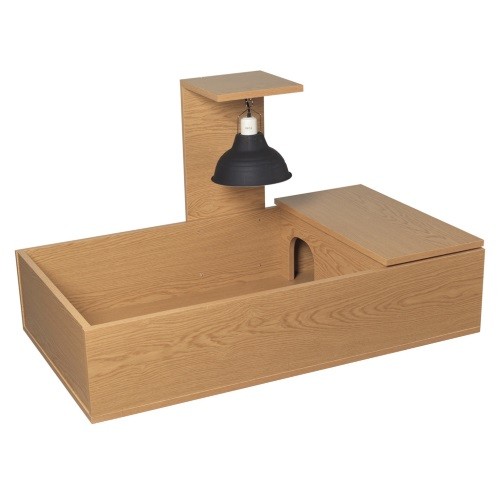
We won’t be making a comment on the whole setup in this post, as we want to focus just on the lighting here. The combi-bulbs are a “jack of all trades and a master of none” – and they certainly aren’t nice to look at for us, so imagine what they look like to a tortoise!
If you’ve ever used one of these setups with the combi-bulbs, you’ll be able to recognise that weird green colour that everything has. Ask yourself, does that look like sunlight?
Most of the respectable stores, at least in the UK, are now moving over to an approach that much more closely resembles full spectrum.
Already got your setup, and it has a combi-bulb, and you’re stuck on what to do next? Don’t worry, you’re in the right place.
So, what lights do I need?
Remember those two categories that we put common tortoises into earlier? This is where we need to know what category your tortoise is in. Because this will help us to create a truly full spectrum lighting rig.
The best way to create a full spectrum setup is by using different lamps together – lamps that each specialise in their own thing. When we mix them all together in one area (the “basking area”), we create a little patch of sunlight in our enclosure that our tortoise can bask under and get the benefits from each lamp together. And of course, the exact lamps we choose will depend on what category our tortoise is in.
We can broadly categorise the specialities as follows: UVB, UVA, Visible Light, and Infrared-A. Remember, each of these components plays part in essential biological processes for tortoises – but generally we put emphasis on UVB and Infrared-A first, then Visible Light, and then UVA.
So let’s work in that order….
UVB
There are specialised terms for providing the appropriate levels of UVB for animals, and it’s measured using Ultraviolet Index (UVI) [1]. But for this article we want to keep it as simple as possible, so we’ll try to stick to the two categories that we’ve already defined [2].
UVB is something that we can’t see, and neither can tortoises. But it does have very important biological effects [4]. Providing UVB is essential for all tortoises [3], but as with all things in life – there’s more than one way to do it!
We recommend using a lamp that creates a nice wide basking area, and the right level of UVB. So let’s say your tortoise is in the “Sun Users” category, we will want to provide an area that is similar to the “full sun” that they get in the wild. And as you’ll know yourself, more sun means more UVB! Equally, if you spend time in the shade then you might not get as much UVB, so the “Shade Users” don’t need as much UVB [3].
Tomaskas believes that, at the time of writing, the best way to provide UVB is with a specialised lamp called a T5HO (or T5-HO). There are two brands that are currently recommended, Arcadia and Zoo Med. Both brands make lamps marketed specially towards certain categories of animals – which is perfect. But because these lamps come in a range of wattages, sizes, and strengths – it makes a minefield out of all of the information.
To make matters worse, each of these brands has a different “fixture”, and those fixtures are different in design which means that they output different amounts of UVB! It’s ok though, we’ve made it as simple as we can below.
As a general rule, we recommend the following:
Shade Users – Arcadia 6% or Zoo Med 5.0, 35cm away from your tortoise when basking
Sun Users – Arcadia 12% or Zoo Med 10.0, 40cm away from your tortoise when basking
At these distances, your tortoise should get the right level of UVB when they are basking. But we must warn you, if you are using a different “fixture”, or if there’s any mesh lid in the way then the UVB received by your tortoise will be seriously reduced – so you may be best getting in touch so that we can discuss a proper way forward for your tortoise.
Infrared
Often mistaken for “heat”, infrared (or IR) is an important part of the full spectrum that all animals utilise for a multitude of beneficial biological processes [5]. You’ve sat by a warm fire and felt the cozy feeling, you’ve stepped out into the sun and got those tingles under your skin – that’s infrared, and tortoises get that too!
Because things are never as easy as they first seem, infrared can be split up into different sub-categories – A, B, and C. It’s Infrared-A that we are focusing on here. We’ll just call it IR or Infrared from here on, but know that we’re talking specifically about Infrared-A.
At this point we want to be certain of one thing, supplying Infrared will cause your tortoise, and probably your enclosure, to heat up. In this article we are focusing on providing a full spectrum of light – and we are not focused on temperatures. In theory, if you provide the correct levels of IR you should stay within safe temperature in the basking area. Just remember that other factors play a part in basking temperature, such as substrate, airflow, and ambient temperatures.
Luckily, IR is fairly easy to supply – it’s what comes out from “heat bulbs” that you’ve no doubt already seen.
There’s a few different types of heat bulbs, and of course they come in different Wattages – and generally speaking, the higher the Wattage, the more IR energy is output.
Normal Heat Lamp
Heat lamps are sold for reptiles in almost all pet shops. You’ll see them on the shelf with lizards on the box. They come in a range of shapes and sizes, and are offered by different brands.
Luckily, we’ve spent a lot of time around heat lamps, so we can advise on some of our favourites. Exo Terra have a good product that we really like, its called the Intense Basking Spot – don’t fret about the name, it’s not nearly as intense or as ‘tight beam’ as it makes out according to our tests. The other lamp we like is the Arcadia Solar Basking Flood, which has a much wider beam and a softer glow. Because they’re so different, they need to be applied differently.
Shade Users – Arcadia Solar Basking Flood 100W, 25cm away from your tortoise when basking
Sun Users – Exo Terra Intense Basking Spot 100W, 35-40cm away from your tortoise when basking
There are, of course, plenty of other lamps that can be used – but the above have both been independently tested by Tomaskas and found to produce the appropriate levels of Infrared when set at the appropriate distances.
Halogen Heat Lamp
This kind of lamp is usually more efficient than a normal heat lamp. You’ll find that brands like to advertise if their lamp is a halogen or not. So if it’s not got “halogen” written on the box, then it’s probably not a halogen lamp.
Halogen lamps work much in the same way as a normal heat lamp, but because they’re so much more efficient they often output very high levels of Infrared when compared to a normal heat lamp of the same wattage. One of the biggest problems we’ve found with halogens is that they have very tight beams – but this can be ok for a smaller species!
To make things even more confusing, the halogen lamps are hugely different in physical size. This is referred to as PAR, and has a number alongside it – such as PAR30 or PAR38. The higher the number, the larger the lamp.
We’ve found consistent results from two main halogen lamp products. Arcadia has a range that are good quality, and a company called 12VMonster also has a range of halogens that have tested positively so far. We only really recommend these lamps on smaller tortoises because of their tight beam.
Shade Users – Arcadia Halogen 50W, 40cm away from your tortoise when basking, OR 12VMonster 35W, 30cm away from your tortoise when basking
Sun Users – Arcadia Halogen 75W, 45cm away from your tortoise when basking
We want to reiterate here that the halogen lamps are very high output, and they should be monitored to make sure that your enclosure doesn’t get too hot.
Visible Light
Perhaps the most obvious part of the spectrum is the visible part. This is what we can see as colour. It goes without saying that tortoises can see this too.
If you’ve seen a UVB lamp, and a heat lamp, then you’ve probably noticed that they do emit visible light. And sometimes it looks like they are bright. But, we can assure you that they’re not bright at all.
Our eyes play tricks on us – they dilate to let in more light – so things can appear brighter than they truly are.
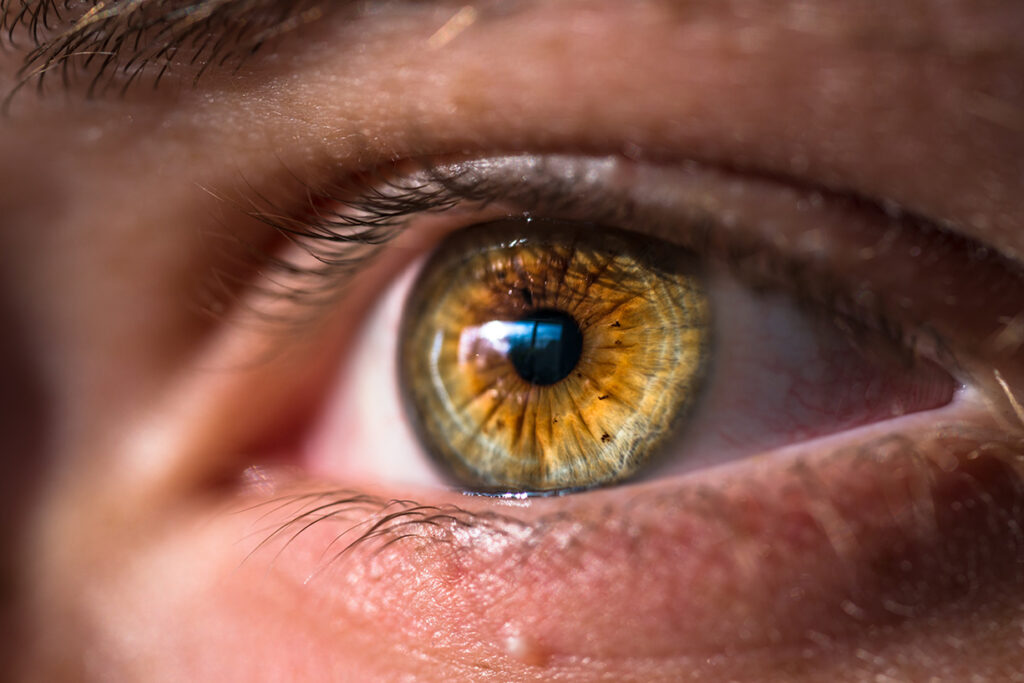
We generally measure the “brightness” of visible light with a Lux Meter. When measuring an enclosure that’s using just a heat lamp and UVB lamp, we tend to measure around 4,000Lux. Sounds like a lot, right?
In full sun, it’s normal to get a reading in excess of 120,000Lux! At the preferred basking levels of both Sun Users and Shade Users, we tend to measure around 40,000 to 80,000Lux.
The light does more than just help with vision. Special chemicals play a part in more than just “vision” – there’s a deep field of research that’s focused on something called “non-visual perception” [6]. In short, bright visible light literally “wakes up” the brain and makes it release hormones that kick-start essential bodily functions, like metabolism and sex drive [7].

A great way of providing bright light is utilising high quality LEDs. This could be done in a few ways.
LEDs are a science in themselves. And recently there’s UVB-emitting LEDs hitting the market to make things even more confusing. At the time of writing this article, such lamps are not recommended – you can read about it on this post.
The main thing to remember here is that it’s really difficult to provide sun-like levels of visible light in a man-made enclosure. We can only try our best.
Loads of the usual names carry LED products that are suitable – Arcadia has a brilliant range called Jungle Dawn LED Bar for example. But Zoo Med, Exo Terra, and some of the other smaller brands also have products that work.
I like the Arcadia Jungle Dawn LED Bars because they can “daisy chain” onto an existing ProT5 fixture, so you can get more light without taking up any extra plug sockets! Such products produce a nice wide area for visible light. Putting one of these alongside your T5 lamp will help to brighten the basking area.
If you prefer more of a “spot”, then there’s still some products that can work!
The SANSI 36W Grow Lights are a personal favourite for this kind of thing – you get a screw-in bulb as well as a decent spread of high quality visible light. Put one or two of these lamps in your setup at a distance of about 30-45cm and you can’t go wrong! This should be the same for both Sun Users and Shade Users.
UVA
Often UVA simply isn’t catered for in reptile keeping. Many zoos are still only just waking up to the fact that it’s been missing from animal care for decades. And although animals can survive without it, UVA is an important part of the full spectrum approach. Though it should only really be implemented after a keeper has got the UVB, IR, and Visible Light correct.
Would it surprise you if I told you that you are colourblind? Well, technically you might not be…but you are compared to your tortoise! [8]
Would it surprise you if I told you that you’ve been lied to by the manufacturers of reptile products? Well, technically you’ve not…but I don’t think you’ve been told the whole truth.
You can’t see UVA – it exists outside your vision. But to a tortoise, UVA is another ‘colour’ that they can see just as well as you may be able to see red, blue, green, or purple! Often, plants utilise this extra colour by producing flowers that are vibrant to animals that can see UVA – such as bees. [9]

There’s even research into tortoises using UVA as a way of navigating the world. – The way UVA is scattered in the sky can produce “stripes” of colour, and these stripes can be used as a way of finding a way home, just like how old human navigation systems used the stars! [10]
“My lamp says that it provides UVA already”, I hear you cry. Yes, it may well do – but it probably doesn’t do it as well as you think! Without getting too technical, the UVA produced by most lamps is lacklustre, and not full spectrum in the slightest!
There is a type of lamp that shines (see what we did there?) in this area, it’s called a Metal Halide Lamp. They’re sometimes called Hight Intensity Discharge (HID) lamps. And they really are the only way of providing proper UVA to an enclosure without using the sun.
The biggest problems with these lamps is that they aren’t cheap to setup and can also get a bit technical to set up. You’ll need a special piece of equipment called a ballast – it’s an electrical device that provides bursts of high power to the inner workings of the lamp to make it turn on, a process called ‘igniting the lamp’.
When they turn on, a few reactions take place and they can even make a spluttering noise similar to a small tin can being dropped on the floor – weird I know. After a few moments of warming up they produce a bright, clean, white light. The output also contains that all important UVA.

Because of the reactions taking place, there is some sensitivity in these lamps. This means that after they’ve been turned off (by accident or on purpose), they can’t turn back on again for up to 15 minutes. So you have to be careful with them as not to put them on a thermostat.
Nothing is ever easy, is it?
There’s so many of these to choose from. Which ballast, which lamp? Do I need one with a lizard on the box?
The ballast you use plays a huge role – but I like the ones with variable wattages, such as the Mega Ray Dimming ballast. If you use this, you can switch the output to match the lamp you buy, 35W, 50W or 70W.
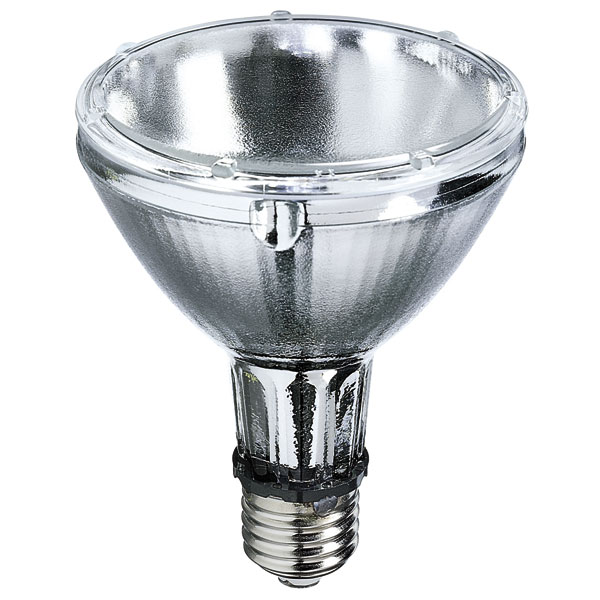
Let’s try to keep it simple… In my experience the best for UVA output are the “human-grade” lamps , and the crème de la crème is the Philips Master Colour 942, but a close second is the GE Constant Colour CMH 842. To be honest, both will work for either application of Shade or Sun Users, but our general recommendations are….
Shade Users – GE 74619 ConstantColour CMH PAR30 70w 842, 40cm away from the tortoise when basking.
Sun Users – MasterColour CDM-R 70W/942 PAR30 30D (Not the Elite Version), 40cm away from the tortoise when basking.
I’ve got the lamps, now what?
So, you’ve decided what lamps you want to use. And at the very least you have provision for UVB, IR, and Visible Light. If you wanted to “supercharge” your full spectrum setup, you’ve also got good provision for UVA – such as the HID lamp.
The thing we need to do now is set them all up.
Remember, our aim is to provide a full spectrum – and an area of “sunlight”. This means that this basking area should contain all the elements that we’ve spoken about – UVB, IR, Visible Light, and if we’re using it, UVA.
In practice, this means placing the different lamps in close proximity in order to get the benefits from each one. This will create that nice full spectrum basking area that we’re after.
I like to have the lights in one area, taking up no more than 50% of the enclosure. This way, the tortoise will always have the option to move into shade if they want to. This can be done in any kind of enclosure, such as a Tortoise Table, a shed, or even an appropriately ventilated vivarium.
For the sake of keeping it simple, I’ll use the example that your enclosure is a Tortoise Table with a rectangular shape. And I’ll presume that it’s properly kitted out with plants, hides, and food/water dishes.
We’ve got a mini animation to try and illustrate a possible setup below. This is an example, so it’s not to scale.
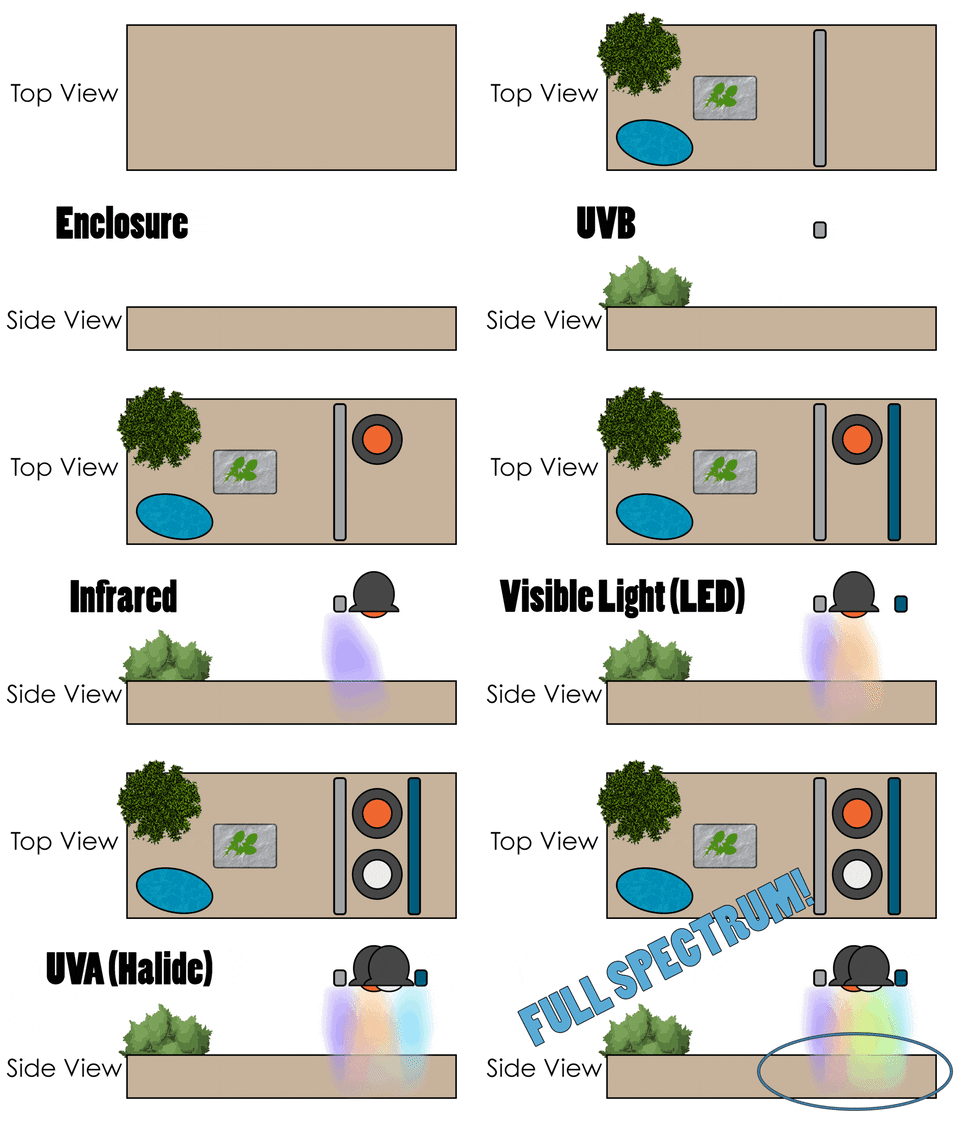
As you can see, if you utilise the range of lamps that we’ve recommended all in one area, you can create a nice full spectrum basking area!
The aim here is that you’re creating a patch of full spectrum sunlight in the enclosure, big enough to completely cover your tortoise in light. Your shelled friend then gets all the benefits of each specialised lamp (and each specialised category of light) all at the same time – just like in nature. And your tortoise can choose to expose themselves to as much or as little light as they want, because there is a gradient down to a “shaded” area on the other end of the enclosure.
Of course, if you have a larger tortoise, such as a Sulcata, or even a large Greek Tortoise, you may need multiple of each lamp. You could end up needing a few heat lamps, for example, just to cover your tortoise completely in light.
An alternative method
The biggest problem with the full spectrum setup is that you can quickly end up with a jumble of wires and plugs, and this can be unsightly for you. Obviously, the tortoise doesn’t care about this, but we always have to consider what you (the keeper) wants too – there’s no point in having an enclosure if you don’t like the look of it!
There is a product on the market that can help to tidy this slightly. It’s not perfect, but it can certainly work.
Arcadia have the ThermalZooPro. It’s a sleek black unit, approximately 70cm x 30cm. And it’s got a bunch of different specialist lamps built in. It can act as a nice “plug and play” basking rig.
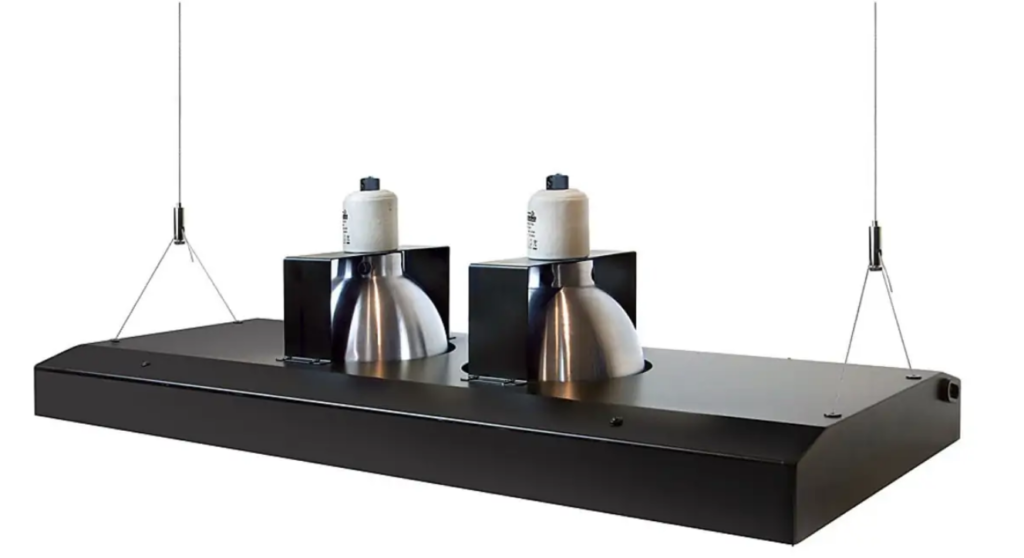
There’s two different types available “off the shelf”. I’d recommend the unit that comes with the Jungle Dawn LED. But the lamps can be adjusted to suit your needs.
However, this basking rig does have some problems. The size might look impressive, but really if your tortoise is much bigger than around 20cm then the ThermalZooPro is probably too small. It also needs to be hung, so if your enclosure is in the house you might not want to hang the tension cords from your ceiling!
The ThermalZooPro is a nice piece of kit, and can work perfectly for some setups – but not all of them.

Conclusion
As you can see, there’s a huge rabbit hole of information when it comes to lighting a tortoise. This article wasn’t comprehensive – we hardly scratched the surface.
If you’re going to try and light your enclosure on your own, we highly recommend staying away from most of the Facebook Groups. And you should consider that most of the information you see on webpages is written by someone who doesn’t specialise in reptile lighting the same way that I do. Many of the forums or Facebook groups are managed by people who have kept tortoises for 30+ years but not changed their husbandry at all in that time. This is no different to imagining a doctor that is still practicing medicine from 30 years ago.
Times have changed, even from as little as 2 years ago! The scientific community is only just learning about the benefits of bright full spectrum lighting. As a part of that scientific community, I aim to bring you real advice about modern lighting techniques.
This article should be taken with a pinch of salt. It’s impossible to cover all the possibilities in one article. I’d highly recommend getting professional advice on your setup or plans. This is the only real way to ensure that you’re properly lighting your tortoise.
Lighting isn’t everything though. Don’t forget to provide a good diet, rich in plant matter [11] – with a wide variety of foods offered. This will keep your tortoise healthy!
If you want to have a chat about your setup, get in touch for a private consultation. Let’s try to make the best setup possible for you and your tortoise!
Literature and further reading
[1] World Health Organization. (2022). Radiation: The ultraviolet (UV) index
[2] Ferguson GW, Brinker AM, Gehrmann WH, Bucklin SE, Baines FM, Mackin SJ. Voluntary exposure of some western-hemisphere snake and lizard species to ultraviolet-B radiation in the field: how much ultraviolet-B should a lizard or snake receive in captivity? Zoo Biol. 2010 May-Jun;29(3):317-34. doi: 10.1002/zoo.20255. PMID: 19484753.
[3] Baines, Frances & Chattell, Joe & Dale, James & Garrick, Dan & Gill, Iri & Goetz, Matt & Skelton, Tim & Swatman, Matt. (2016). How much UV-B does my reptile need? The UV-Tool, a guide to the selection of UV lighting for reptiles and amphibians in captivity. Journal of Zoo and Aquarium Research 4(1): 42 – 63. http://www.jzar.org/jzar/article/view/150. Journal of Zoo and Aquarium Research. 4. 42 – 63.
[4] Holick, M. F (2016) – Biological Effects of Sunlight, Ultraviolet Radiation, Visible Light, Infrared Radiation and Vitamin D for Health. Anticancer Research 36: 1345-1356
[5] Tosini et al. (2001) – The circadian system of reptiles: a multioscillatory and multiphotoreceptive system. Physiology & Behavior 72 (2001) 461-471.
[6] Grace, Michael S. (1997) – The visual system and non-visual photoreception. The Biology Husbandry, and Health Care of Reptiles. Lowell Ackerman, DVM, ed. Vol. I, pp. 325-341.
[7] Sarika Paul and Timothy M Brown (2019) – Direct effects of the light environment on daily neuroendocrine control. Journal of Endocrinology, 243:1.
[8] Kelber, A., Vorobyev, M. & Osorio, D. (2003) – Animal colour vision – behavioural tests and physiological concepts. Biological Reviews, 78 81–118.
[9] James K. Bowmaker (2012) – Evolution of the Vertebrate Eye. How Animals See the World: Comparative Behavior, Biology, and Evolution of Vision 23 441–472.
[10] Fleishman, Leo & Loew, Ellis & Leal, Manuel. (1993). Ultraviolet Vision in Lizards. Nature. 365. 397-397. 10.1038/365397a0.
[11] Modica, Breanna Paige (2016) – Physically Effective Fiber Threshold, Apparent Digestibility, and Novel Fecal Microbiome Identification of the Leopard Tortoise (Stigmochelys pardalis).