

The cost of living crisis in the UK
View the full report as a PDF here
Please note: the information on this article was written in August 2022. Government help may have changed at the time you are reading this article.
The UK is facing a cost of living crisis, and a few reptile-related companies are getting involved – throwing their “words of wisdom” into the infosphere.
I’ve tried not to offer solid “monetary advice”, as I know that this is a highly contentious thing to do, especially coming from anyone with more than a couple hundred pounds in the bank. The fact that a huge brand, or established pet shop, can make comments about how things “only” cost £X could definitely be seen as offensive.
I don’t make any money from recommendations made in this post – that’s not what I’m here to do.
Practical Changes
Outdoor Keeping
At the time of writing, we are in summer. In this time, significant amounts of animals can be kept outdoors – even in a small terrace house with a small garden. For example, the most common tortoises I personally see in captivity are all Mediterranean species. Such animals can thrive in a safe outdoor enclosure. If your animal is outdoors, then you don’t need to spend money heating and lighting their indoor enclosure. Celtic Reptile & Amphibian (https://celticra.uk/) are a UK based reptile breeder that specialises in outdoor keeping. Their primary focus is on UK and European species, but much of their practical skills can be transferred over to species such as garter snakes, tortoises, and turtles – at least for the summer months. And there is no reason that, if in a safe enclosure, a leopard gecko couldn’t be outside on a warm day in the UK. Although care should always be taken to ensure animals don’t overheat, even in the UK – a very real threat!
“there is no reason that, if in a safe enclosure, a leopard gecko couldn’t be outside on a warm day in the UK”
Hibernation/Brumation
Many species, including bearded dragons, tegus, leopard geckos, and many tortoise and turtle species can cool down for winter safely and enter a form of brumation.
This slowing down of the metabolism is actually a natural part of the annual metabolic cycle for a lot of species. By allowing a reptile to hibernate we allow for the body to rest naturally – this gives time for the organs to heal and for a slowdown in growth (accelerated growth being one of the major factors in MBD, especially in tortoises and turtles).
Not only are we essentially enhancing our husbandry by brumating reptiles, but we’re also cutting out the cost of heating an enclosure, lighting an enclosure, and feeding an animal for a few months – the months which we’d otherwise be using more money on energy to heat the home, buying Christmas presents, etc.
The major citation here is that an animal should only be brumated if it is a species that naturally would do so, and if it is fit and able.
Natural Feeding
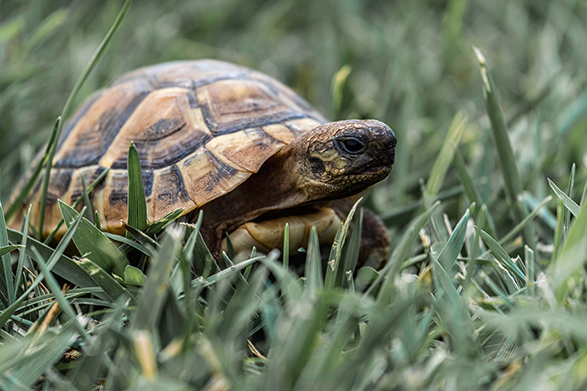
Some of the most commonly kept reptiles – bearded dragons, blue tongue skinks, and tortoises – can be fed most if not all of their diet for free.
By picking safe-to-feed plants outdoors, a keeper will eliminate the need to purchase plants from the supermarket. Supermarket greens are highly nutritious for humans, but sometimes too nutritious for reptiles. In the wild, many herbivorous animals thrive on a low nutrient-rich and high fibre diet.

Wild plants can be the perfect food source. They aren’t filled with fertilisers to artificially boost their nutrient content, and they are readily available – even on a Friday evening when you’ve just got home from work and need to feed Timmy the Tortoise!
A good, free, resource for checking toxicity of plants is The Tortoise Table website (www.thetortoisetable.org.uk), there is also an app. This is a large database of common plants along with details of their suitability as food for tortoises – but this also generally extends over to other plant eaters.
Feed Less
One huge problem we face in the UK is an obesity problem. That is, obesity of our pets. Many pets in the UK are overfed. I myself am guilty of this – and who can blame someone for wanting to interact with their reptile and watch them really enjoy their food?
But ultimately, feeding every day is probably not essential for most species. Even every other day may be too much. For many snakes, once every 2 months is plenty.
“By cutting down on feeds, we may be able to reduce the amount of overweight reptiles”
Feeding more than necessary can put real strain on the liver and kidneys of our animals, just as it does in humans. Excess fat is just as bad for a reptile as it is for a human. In fact, some reptiles show signs of endothermy with and without so-called ‘brown fat’, which is a thesis in itself. By cutting down on feeds, we may be able to reduce the amount of overweight reptiles and also make our animals healthier long term. And in doing so, we can cut down on the cost of feeding otherwise increasingly expensive foods such as feeder insects, meat, eggs, rodents, and fruit.
Care should of course always be taken to ensure nutritional needs of an animal are always met.
Reduce Daytime Hours
As a total energy-saving measure, and with no real biological benefit, lights can be turned on later and turned off earlier. This can mean reducing the time that your heat lamps, UV lamps, and LEDs are turned on.
By reducing the daylight time by just 1 hour (half an hour in the morning and half an hour in the evening), a keeper could reduce the cost of keeping animals in small but significant amounts. A keeper could even use this as a way of really enhancing husbandry and creating a more natural setup. Lights could be “staggered” on at the start of the day, and equally “staggered off” at night. This could simulate a sunrise and sunset.
This may not be the best way of saving money for someone with just a single reptile. But if there is more than one enclosure, then this method could help to save some money.
You should always make sure that you provide appropriate lighting – including the correct UVI.
Breeding Feeder Insects
There are many guides online on how to breed your own feeder insects. I find great success with dubia cockroaches – although they do require supplemental heat to breed properly.
Mealworms, superworms, and crickets can call breed in room temperatures. And these species can survive on grass that you would find outside (pesticide free).
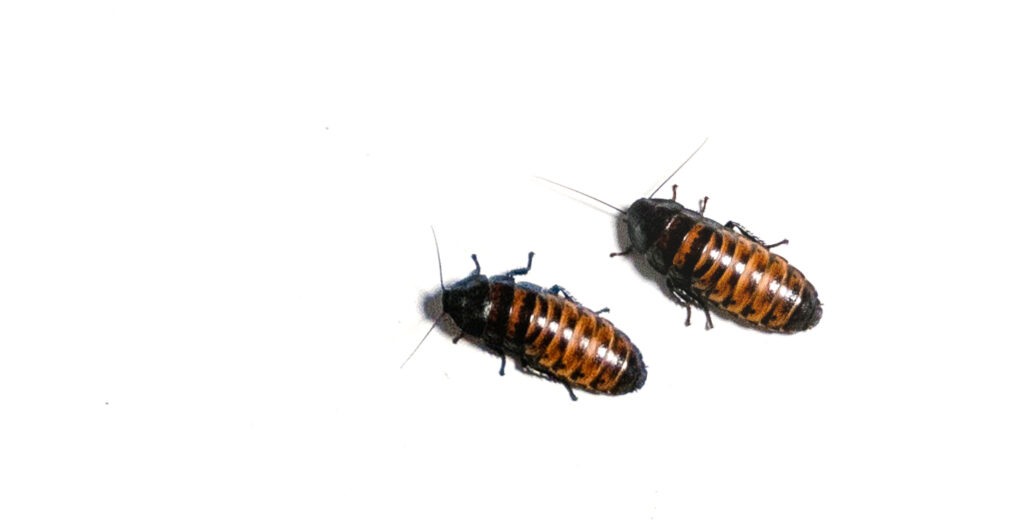
By breeding your own insects, you can save money long term on having to buy new insects on a regular basis.
Not only can this save money, but by feeding insects with weeds and grass you can create higher quality food for your reptiles. This is a term called gutloading and is beneficial to our animals.
Basic Insulation
If you have an animal that needs to stay awake during the winter, or needs to be kept warm at night, then you may be able to insulate their enclosure to increase the efficiency of any heating elements.
Something as simple as old bedsheets over an enclosure can help to insulate it (be sure to leave space for ventilation, and enough space from the heating elements that bedsheets don’t catch on fire). Or spare sheets of plywood can be used on the outside of glass enclosures as a good insulator.
By insulating in this way, you could reduce the amount of supplemental heat that you need to provide at night.
Drop the Wattage
Many people will purchase a “heat lamp” without really thinking about it. But not all lamps are created equally. Some of the “Intense” incandescent lamps, with a “narrow reflector” shape (brands such as Exo Terra, Reptile Systems, and Zoo Med have them) are, by design, stronger in output compared to some equivalent Wattage lamps.
If a user normally buys a 100W Floodspot lamp from ProRep, then a 75W Exo Terra Intense Basking Spot lamp may be able to meet the same requirements.
“not all lamps are created equally”
Equally, Arcadia claims that instead of using a 100W Solar Basking Spotlight, keepers can swap out for a 75W Arcadia Halogen Heat Lamp to get the same results.
Also, not using extra heating items such as heat mats will reduce energy usage.
Care should always be taken to ensure that the needs of an animal are being met when making changes to an enclosure in any way.
Seeking Help
The UK government, local authorities, and even some water suppliers have schemes available to help with saving money or reducing costs.
Equally, there are charities that are able to offer services to anyone in need to true financial assistance.
This section provides pointers to places where you may be able to seek help or advice from professionals.
Saving Water (UK)
Most water suppliers in the UK offer free items to help save water and reduce costs. These can include toilet cistern gels, water saving shower heads, and other items.
You can search the internet with the name of your provider and the phrase “save water kit”.
Or you can head to www.savewatersavemoney.co.uk, enter your postcode, and sign up for a free kit that way if you’re eligible.
You may also be eligible for reduced water bills if you are on certain benefits. More information is available at https://www.ccwater.org.uk/households/help-with-my-bills/.
Money Saving Expert (MSE)
It pains me to say this, but the Money Saving Expert Website has a good list of money saving tips for the cost of living crisis.
The website makes significant money via commission or referral programmes – if you use any link on MSE then the website pays MSE for your click. To me, this feels unjust for a service often used by people in financial crisis.
That said, some of the tips on this page are quite useful: https://www.moneysavingexpert.com/family/cost-of-living-survivalkit/
Benefit Checker (UK)
You can use an independent, free, and anonymous benefits calculator to check what you could be entitled to. This will give you an estimate of the benefits you could get and how much your benefit payments could be: https://www.gov.uk/benefits-calculators.
If you prefer to speak to someone in person, you can find a local adviser using the AdviceLocal system, provided by the charity
RightsNet: https://advicelocal.uk/find-an-adviser.
National Debt Line (UK)
If times are tough, it may be in your interest to speak to a professional service that can talk you through your money problems. There is nothing wrong with asking for help. Contact them here: https://www.gov.uk/national-debtline